All Categories
Featured
Table of Contents
- – Integrated vs Location-Specific Auto glass Str...
- – Expertise and Their Significance in [a:special...
- – Essential Aspects of Counseling Auto glass
- – Multiple Office Auto glass Management for [a:...
- – Adjusting Your [a:specialty] Strategy for To...
- – Long-Term vs Short-Term Auto glass Approaches
- – Optimizing Digital Marketing Across Multiple...
See our to get more information regarding our dedication to excellenceor browse our for additional understandings. The future comes from those that embrace it. Will you be among them?.
This distinction highlights AI's prospective to introduce a layer of intelligence that improves efficiency and customization. There's. As it automates repeated jobs such as screening resumes or monitoring presence, AI substantially shortens the moment invested on these procedures. This allows human resources experts to change their focus from ordinary administrative tasks to higher-value tasks that add to calculated goals.
Integrated vs Location-Specific Auto glass Strategies
AI ensures a higher level of accuracy since it filterings system out these mistakes, leading to even more consistent results and reducing the dangers associated with hands-on errors. With AI automation, companies can release up their Human resources team to focus on efforts that drive growth.
AI automation makes processes smarter, much more efficient, and employee-centric. Beginning with the hiring process and reaching compliance, AI-powered human resources tools deal with recurring and data-heavy tasks and enable human resources groups to concentrate on approach and innovative reasoning. Listed below, we'll damage down essential human resources functions that AI can dramatically redefine: Hiring is among one of the most lengthy jobs for human resources, and AI is a transforming factor below.
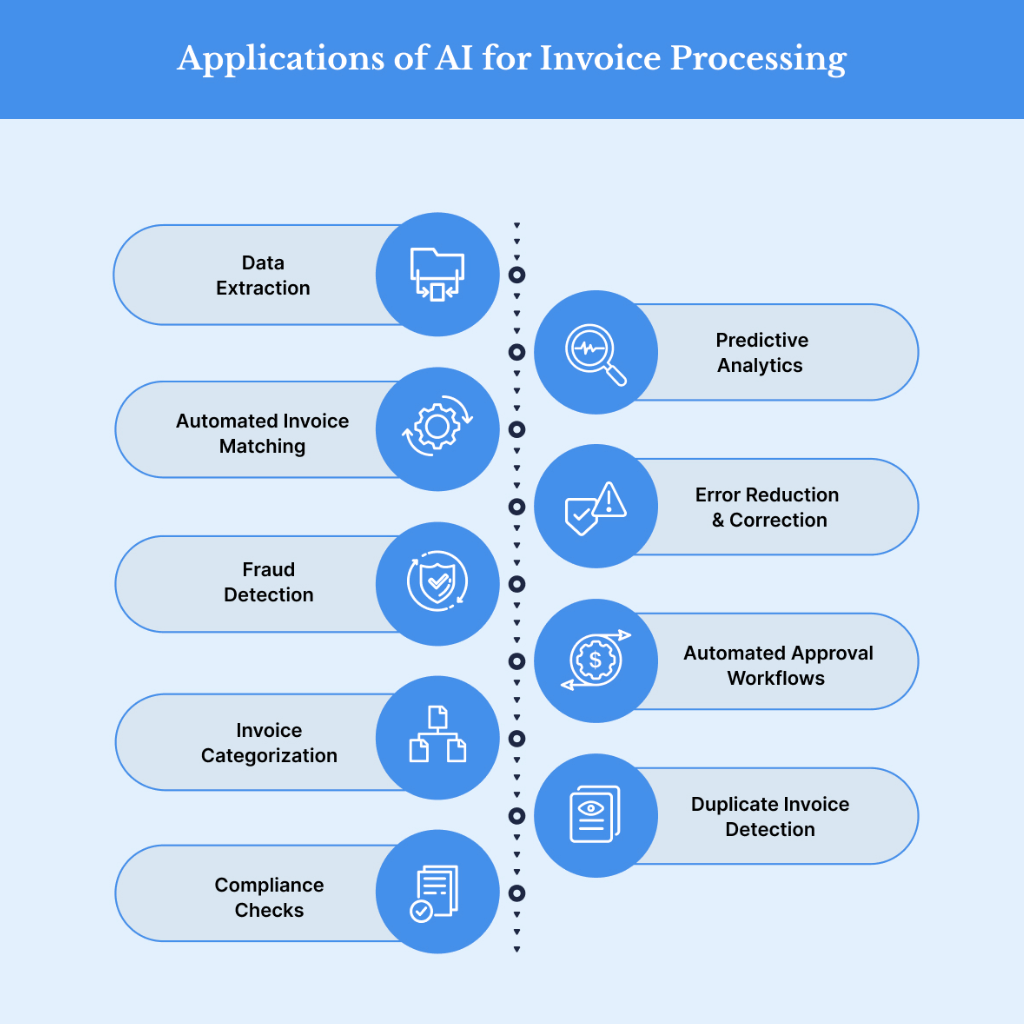
A well-structured onboarding procedure can make all the distinction to ensure that they stay. AI-powered chatbots can offer prompt response to common inquiries and reduce the demand for human resources to continuously handle standard queries. Furthermore, AI devices can lead new hires via the necessary paperwork, training modules, and business policies so that they're geared up to be successful from day one.
Expertise and Their Significance in [a:specialty] Search Visibility
Collecting and analyzing staff member comments works for comprehending workplace spirits. AI devices can keep an eye on interaction through surveys or peer reviews, all which provide actionable insights to HR teams. This gives way for calculated tweaks to boost staff member complete satisfaction and retention. AI streamlines attendance management because it can automate time monitoring or absence monitoring.
AI tools can help with this due to the fact that LLMs or ad-hoc AIs can track policy updates. Below's exactly how AI optimizes HR processes: AI takes over repetitive and time-consuming jobs, like return to evaluating.
Essential Aspects of Counseling Auto glass
It's crucial to and develop where automation will have the most effect. If you're focused on improving recruitment, an AI system that can successfully create task descriptions could be your ideal bet.
One of one of the most notable advancements will be the. This technology will certainly enable human resources teams to predict which candidate will be the most effective for a task simply by reviewing a return to. It will also figure out future labor force requirements, identify worker retention threats, and even recommend which workers could profit from extra training.
One more area where AI is established to make waves is in. It's most likely that staff members won't desire to chat with digital health aides powered by AI.
Multiple Office Auto glass Management for [a:specialty] Practices
In terms of modification, generative AI could take them even better. And discussing that stress of technology, can come to be a game-changer in HR automation. This modern technology is expected to surpass standard chatbots and aid HR teams create customized work summaries, automated performance evaluations, and even individualized training programs.
The genuine beauty of generative AI is that it can make web content and solutions that fit each special business need. AI automation is rewriting HR as it manages repeated and taxing tasks and allows human resources specialists to concentrate on calculated goals. AI tools provide speed, accuracy, and cost financial savings. However, an improved staff member experience and reliable information for decision-making are likewise benefits of having AI linked into a HR process.
The idea of "a machine that thinks" days back to ancient Greece. Because the introduction of electronic computing (and loved one to some of the topics reviewed in this article) crucial events and landmarks in the development of AI consist of the following: Alan Turing publishes Computing Machinery and Knowledge. In this paper, Turing popular for damaging the German ENIGMA code during WWII and typically referred to as the "father of computer technology" asks the complying with concern: "Can machines think?" From there, he uses an examination, now notoriously referred to as the "Turing Examination," where a human interrogator would try to compare a computer system and human text feedback.
Adjusting Your [a:specialty] Strategy for Tomorrow's Search Behavior
John McCarthy coins the term "expert system" at the first-ever AI seminar at Dartmouth College. (McCarthy went on to create the Lisp language.) Later on that year, Allen Newell, J.C. Shaw and Herbert Simon create the Reasoning Philosopher, the first-ever running AI computer program. Frank Rosenblatt constructs the Mark 1 Perceptron, the first computer based upon a semantic network that "found out" via experimentation.
Semantic networks, which use a backpropagation formula to train itself, became commonly utilized in AI applications. Stuart Russell and Peter Norvig release Artificial Knowledge: A Modern Strategy, which becomes one of the leading textbooks in the research study of AI. In it, they explore 4 potential objectives or meanings of AI, which sets apart computer system systems based on rationality and assuming versus acting.
With these new generative AI techniques, deep-learning versions can be pretrained on big quantities of data. The most up to date AI patterns indicate a proceeding AI renaissance. Multimodal designs that can take multiple kinds of information as input are offering richer, a lot more durable experiences. These models bring with each other computer system vision image recognition and NLP speech recognition capabilities.
Long-Term vs Short-Term Auto glass Approaches
Below are the key ones: Offers Scalability: AI automation changes easily as company needs grow. Uses Rate: AI models (or tools) procedure info and react instantly.
Collect Data: Gather relevant data from trusted sources. The data might be insufficient or have additional details, but it creates the base for AI.Prepare Data: Clean the data by eliminating mistakes and redundancies. Organize the data to fit the AI method you plan to make use of. Select Algorithm: Select the AI algorithm ideal suited for the problem.
This assists examine if the AI design finds out well and carries out properly. Train Model: Train the AI design utilizing the training information. Test it consistently to boost precision. Integrate Model: Incorporate the qualified AI design with the existing software application. Test Model: Evaluate the integrated AI design with a software program application to guarantee AI automation functions correctly.
Medical care: AI is used to anticipate illness, manage client documents, and deal individualized medical diagnoses. Production: AI predicts devices failures and takes care of high quality checks.
Optimizing Digital Marketing Across Multiple Locations
It aids projection demand and established vibrant prices. Stores additionally use AI in stockrooms to improve stock handling. AI automation works best when you have the right devices constructed to take care of specific tasks.
Boosted Device Insurance Coverage: Execute your produced tests throughout 3000+ browsers, OS, and device combinations. ChatGPT: It is an AI tool that assists with jobs like writing, coding, and answering inquiries. You type a timely, and it responds in natural language. ChatGPT is made use of for composing e-mails, summarizing text, generating concepts, or fixing coding issues.

Table of Contents
- – Integrated vs Location-Specific Auto glass Str...
- – Expertise and Their Significance in [a:special...
- – Essential Aspects of Counseling Auto glass
- – Multiple Office Auto glass Management for [a:...
- – Adjusting Your [a:specialty] Strategy for To...
- – Long-Term vs Short-Term Auto glass Approaches
- – Optimizing Digital Marketing Across Multiple...
Latest Posts
Smartphone User Experience in Body shop for Mental Health Professionals
Why Standard Marketing Doesn't Work for [a:specialty] Providers
Preparing for Voice Questions in Mental Health Discovery
More
Latest Posts
Smartphone User Experience in Body shop for Mental Health Professionals
Why Standard Marketing Doesn't Work for [a:specialty] Providers
Preparing for Voice Questions in Mental Health Discovery